Festivus, the quirky secular holiday famously declared as “a Festivus for the rest of us,” has become a cultural phenomenon thanks to its appearance in the 1997 “Seinfeld” episode “The Strike.” But, beneath the aluminum pole and feats of strength lies a real family tradition that predates the show by decades.
Created by Daniel O’Keefe Sr., father of “Seinfeld” writer Dan O’Keefe, the original Festivus was a deeply personal, often bizarre ritual that blended eccentricity, family bonding, and a touch of the sinister. While the “Seinfeld” version amplified its comedic potential for television, the O’Keefe family’s iteration was more unpredictable and rooted in personal lore.
The Origins and Traditions of the Real O’Keefe Festivus
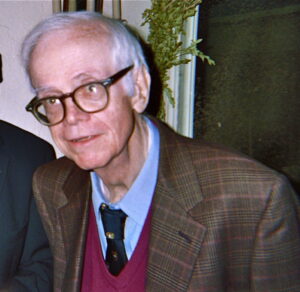
The true Festivus began in 1966, not as a rebellion against holiday commercialism, but as a celebration of a personal milestone: the anniversary of Daniel O’Keefe Sr.’s first date with his future wife, Deborah. A highly intellectual man who spoke 40 languages and edited for “Reader’s Digest,” O’Keefe Sr. conceived the holiday as a secular alternative that emphasized family without religious or consumerist trappings. It went on a brief hiatus during his children’s early years but was revived in 1975, continuing annually until around 1990.
Unlike the structured event in “Seinfeld,” the O’Keefe Festivus had no fixed date as it “floated,” occurring whenever O’Keefe Sr. deemed the moment right, sometimes multiple times a year between September and May, or even in August. This unpredictability added an element of surprise; family members might return home to discover candles lit, strange music playing, and “weird things pinned to the walls.”
The holiday’s tone was influenced by O’Keefe Sr.’s personality, who was described by his son Dan as an undiagnosed bipolar individual and severe alcoholic who remained remarkably high-functioning, which lent it a “bizarre and sinister” undercurrent.
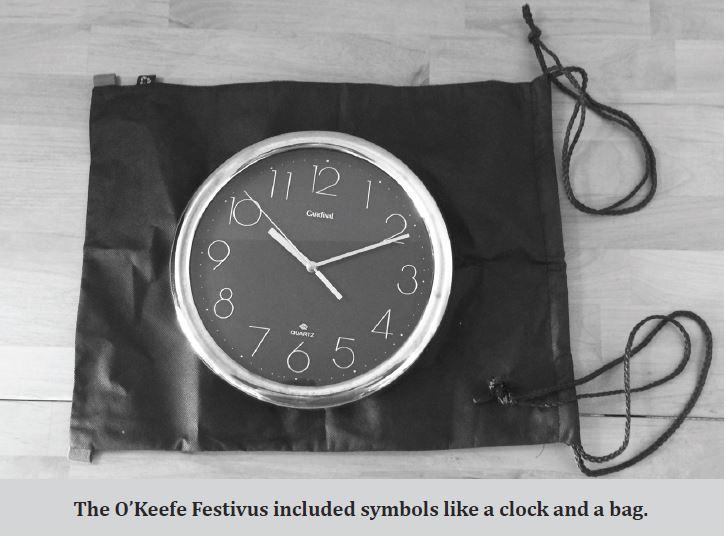
Core traditions included a clock placed in a bag and nailed to the wall (always the same wall, but not necessarily the same clock or bag). Its meaning was deliberately obscure; when asked, O’Keefe Sr. would reply, “That’s not for you to know.” O’Keefe Sr. proudly revealed the secret nature of this enigmatic ritual.
Tape recordings were integral to the holiday. A hallmark inspired by Samuel Beckett’s Krapp’s Last Tape, these involved a cassette tape recorder capturing family conversations, songs, and complaints. O’Keefe Sr. sometimes hid the recorder in his coat to trick his sons into sharing complaints, which later evolved into the “airing of grievances.”
Festivus holidays were themed, which varied by year, with existential questions like “Are we scared? Yes!” or “Too easily made glad?”
Festivus was accompanied by a family meal, which consisted of turkey or ham (sometimes lamb chops or stew), followed by pecan pie and champagne for the adults. Normal dinnertime rules were relaxed, with speaking with mouths full or licking plates being encouraged.
Activities included reciting poetry (including an annual special poem), singing Irish songs or a German “pig song,” Play-Doh sculpture contests, wearing amusing hats made from paper and Play-Doh, displaying anti-fascism signs, and exchanging peculiar gifts like wrapped rocks or toilet paper rolls. Wrestling matches did occur among the sons of the family, but they weren’t formalized as a ritual to conclude the holiday.
The phrase “a Festivus for the rest of us” originally alluded to the living, after the death of O’Keefe Sr.’s mother in 1976, emphasizing those who remained.
Overall, it was celebrated alongside Christmas, adding a layer of whimsy rather than replacing traditional holidays.
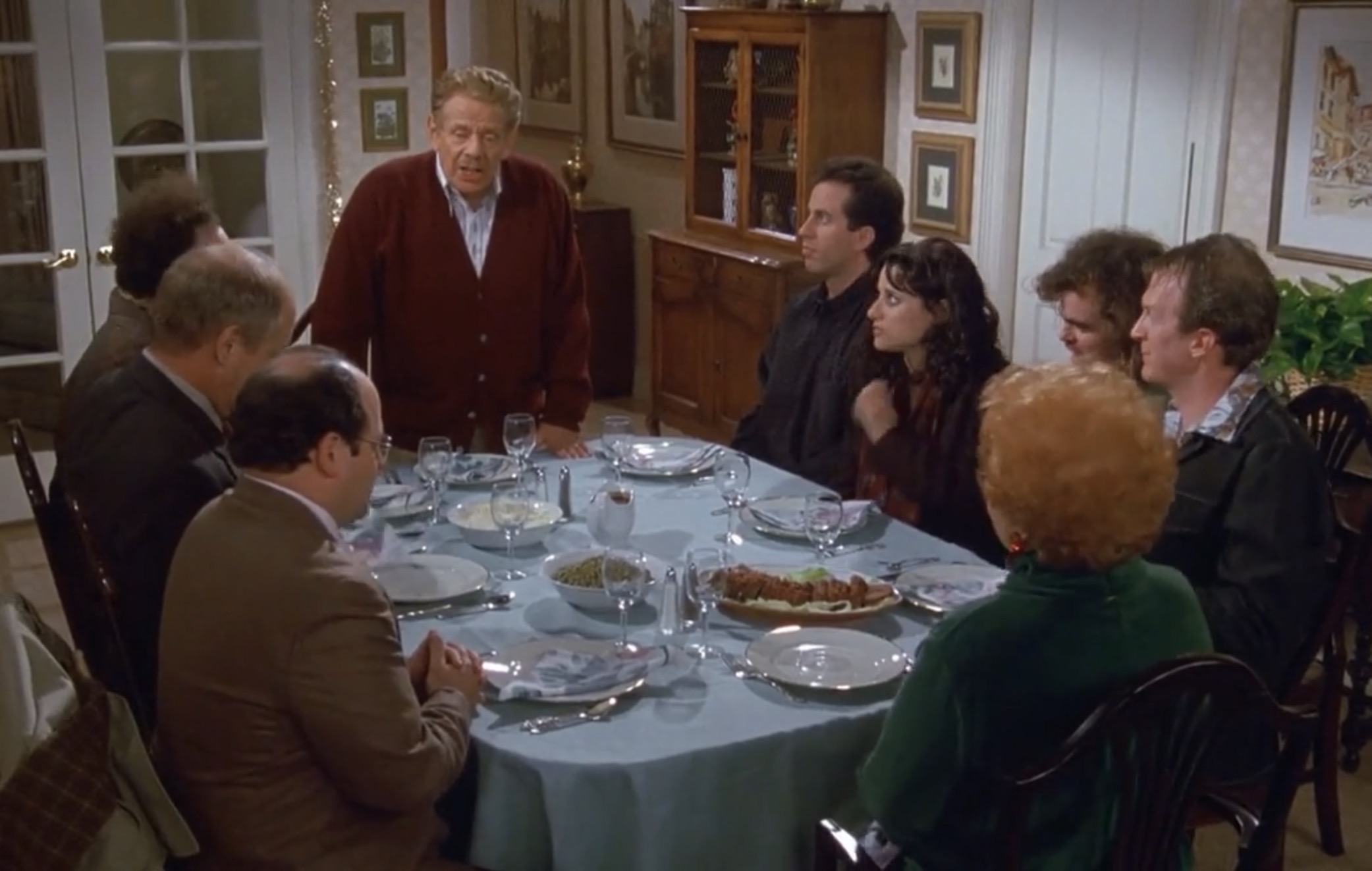
Festivus as seen in Seinfeld’s “The Strike”
In the “Seinfeld” episode, Festivus is reimagined as a fixed December 23 holiday invented by Frank Costanza (played by Jerry Stiller) as a protest against Christmas commercialism.
The episode portrays George’s embarrassment when his boss discovers the family tradition, resulting in a chaotic gathering. Dan O’Keefe, who co-wrote the episode, drew from his family’s practices but made significant changes for comedic effect after initial reluctance.
Key elements include:
The Festivus Pole: An unadorned aluminum pole, praised for its “very high strength-to-weight ratio” and lack of distracting tinsel. This was an addition by writer Jeff Schaffer.
Airing of Grievances: A formal post-dinner ritual where Frank declares, “I got a lot of problems with you people, and now you’re going to hear about it!” Participants share disappointments from the year.
Feats of Strength: The holiday ends only when the head of the household is pinned in a wrestling match.
Festivus Miracles: Kramer labels mundane coincidences as miracles, adding absurdity.
Festivus Dinner: A simple meal of what appears to be meatloaf on lettuce, with no alcohol (though Kramer’s boss sneaks some from a flask).
The episode frames Festivus as a dysfunctional family alternative to Christmas, inviting outsiders and emphasizing humor through conflict.
Festivus: From Familial Eccentricity to Sitcom Satire

The real O’Keefe Festivus and the “Seinfeld” version share core ideas like anti-commercialism and family venting, but the nuances reveal how Dan O’Keefe adapted a personal, often unsettling tradition into broad comedy.
The O’Keefe Festivus, with its tape-recorded existential musings and unexplained symbols, was a unique expression of one family’s quirks, shaped by Daniel O’Keefe Sr.’s inventive mind. When transplanted to “Seinfeld,” it became a satirical gem that resonated widely, inspiring real-world celebrations with poles and grievances.
Yet, the nuances, from the real version’s sinister spontaneity to the show’s polished absurdity, remind us how personal traditions evolve in pop culture. As Dan O’Keefe has remarked, his father would have embraced the additions, like the pole or wrestling, if he’d thought of them.
Whether you nail a clock to the wall or wrestle a friend, Festivus endures as a testament to human creativity… for the rest of us.